



Buying new door hardware is exciting—until you discover the lock doesn't fit your door.
One of the most common reasons homeowners encounter installation problems is failing to measure door thickness before purchasing hardware.
Fortunately, measuring door thickness only takes a few seconds and can help ensure your new door knob, lever, deadbolt, or handleset fits correctly.
In this guide, we'll explain how to measure door thickness, standard U.S. door sizes, and why thickness matters when selecting new hardware.
Why Door Thickness Matters
Most residential door hardware is designed to fit a specific range of door thicknesses.
If the door is too thin or too thick, you may experience:
✔ Installation difficulties
✔ Exposed mounting hardware
✔ Improper latch operation
✔ Security concerns
✔ Compatibility issues
Before purchasing new hardware, always verify that your door falls within the supported thickness range.

How to Measure Door Thickness
Measuring door thickness is simple and requires only a tape measure or ruler.
Step 1: Open the Door
Open the door so the edge is fully visible.
Step 2: Measure Across the Door Edge
Measure from one face of the door to the other.
Do not include:
- Weatherstripping
- Decorative trim
- Door stop molding
Only measure the actual door slab.
Step 3: Record the Measurement
Most residential doors will fall into one of several standard thickness categories.

Standard Door Thickness Sizes
1-3/8" Door Thickness
The most common interior door thickness in North America.
Typically used for:
✔ Bedrooms
✔ Bathrooms
✔ Closets
✔ Hallways
Most interior door knobs and levers are designed for this size.

1-3/4" Door Thickness
The most common exterior door thickness.
Typically used for:
✔ Front doors
✔ Side entry doors
✔ Garage entry doors
✔ Exterior access doors
Most entry locksets, deadbolts, and handlesets are designed around this dimension.

2-1/4" Door Thickness
Less common, but often found on:
✔ Luxury homes
✔ Historic properties
✔ Custom-built homes
✔ Heavy solid wood entry doors
These doors may require:
- Thick door kits
- Longer mounting screws
- Specialty hardware
Always check compatibility before purchasing.

Door Thickness vs Backset: What's the Difference?
Many homeowners confuse door thickness with backset.
They are completely different measurements.
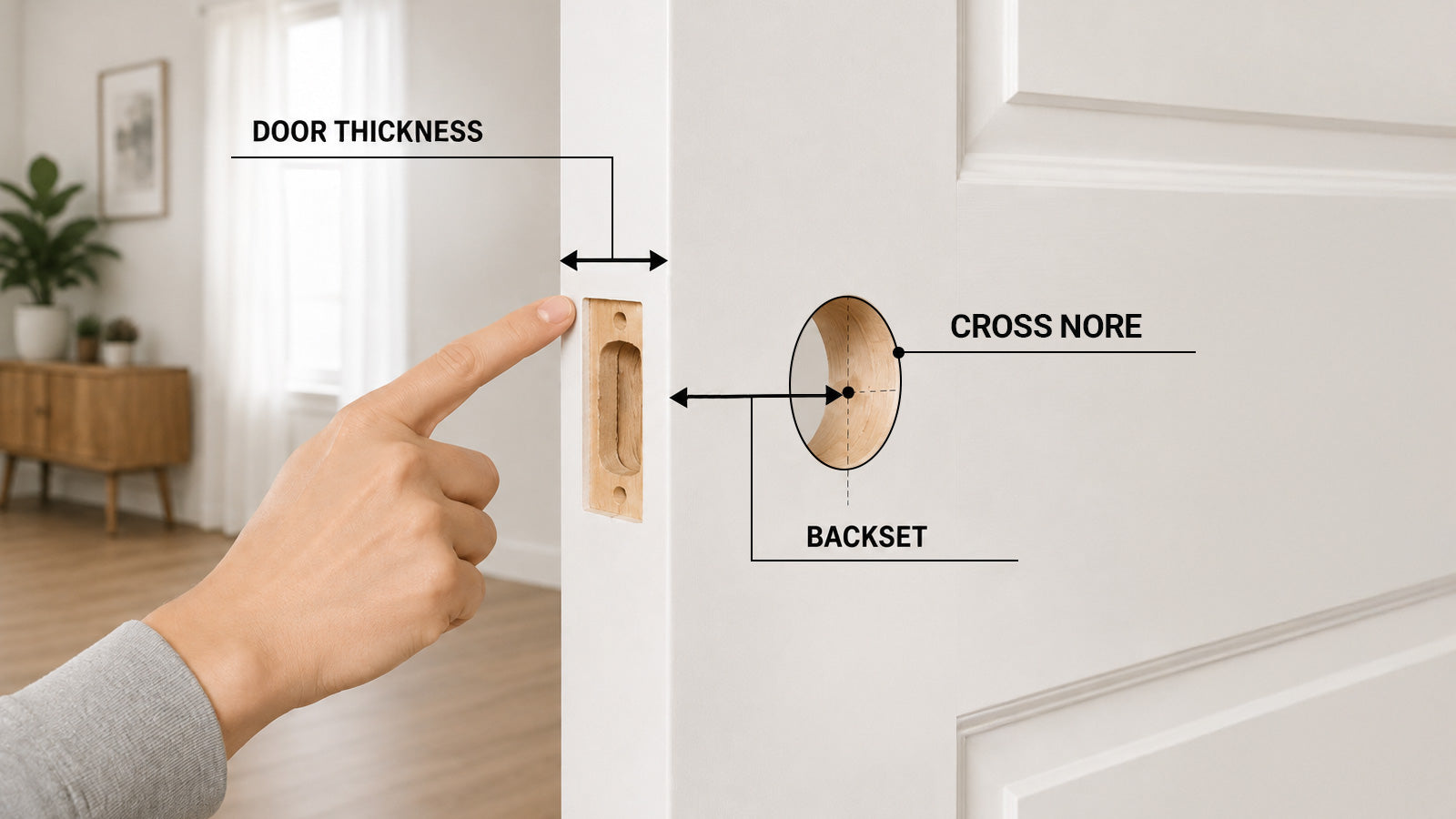
Door Thickness
Measures:
Door face → Door face
Examples:
✔ 1-3/8"
✔ 1-3/4"
✔ 2-1/4"
Backset
Measures:
Door edge → Center of bore hole
Common backsets include:
✔ 2-3/8"
✔ 2-3/4"
Both measurements are important when choosing new hardware.

Will Most Hardware Fit My Door?
Most residential hardware is designed to fit:
✔ 1-3/8" to 1-3/4" doors
This includes many:
- Door knobs
- Door levers
- Deadbolts
- Entry locksets
- Handlesets
For example, most SENY door hardware is designed for standard residential doors within this range.
Always review product specifications before ordering.
Special Considerations for Older Doors
Older homes may feature:
- Mortise locks
- Non-standard door thicknesses
- Oversized hardware openings
- Previous modifications
If you're upgrading an older door, additional preparation or reinforcement plates may be necessary.
Frequently Asked Questions
What is the standard thickness of an interior door?
Most interior doors are 1-3/8" thick.
What is the standard thickness of a front door?
Most residential front doors are 1-3/4" thick.
Can hardware fit a 2-1/4" thick door?
Some hardware can, but many products require thick-door kits or specialty mounting hardware.
Do all door knobs fit every door thickness?
No. Always verify compatibility before purchasing.
Final Thoughts
Measuring door thickness is one of the simplest yet most important steps when shopping for new hardware.
In most homes, you'll find either:
✔ 1-3/8" interior doors
✔ 1-3/4" exterior doors
Taking a quick measurement before ordering can help ensure a smoother installation and prevent unnecessary compatibility issues.