



Door Lever vs Door Knob for Front Doors: Which Is the Better Choice?
When choosing front door hardware, one of the most common questions homeowners ask is:
Should I choose a door lever or a door knob?
Both options provide security and functionality, but they offer different advantages in terms of accessibility, appearance, and everyday use.
In this guide, we'll compare front door levers and door knobs to help you decide which option best fits your home.
Door Lever vs Door Knob: What's the Difference?
The primary difference is how the door is operated.
Door Knob
A door knob requires the user to grasp and rotate the knob before opening the door.
Door Lever
A door lever operates by pushing down on the handle.
Both can be paired with keyed entry functions and deadbolts for exterior security.

Accessibility and Ease of Use
One of the biggest advantages of a door lever is ease of operation.
Door Lever Advantages
✔ Easier to open when carrying groceries
✔ Convenient for children and older adults
✔ ADA-friendly design
✔ Requires less grip strength
Door Knob Advantages
✔ Familiar operation
✔ Traditional appearance
✔ Less likely to catch on clothing
For homeowners prioritizing convenience and accessibility, levers often have the advantage.

Security Considerations
Many homeowners assume door knobs are more secure than levers.
In reality, security depends more on the lock mechanism than the handle style.
A keyed entry lever and a keyed entry knob can provide similar levels of security when paired with:
✔ Quality lock cylinders
✔ Reinforced strike plates
✔ Single-cylinder deadbolts
✔ Proper installation
For front doors, the deadbolt usually provides the primary security.

Style and Appearance
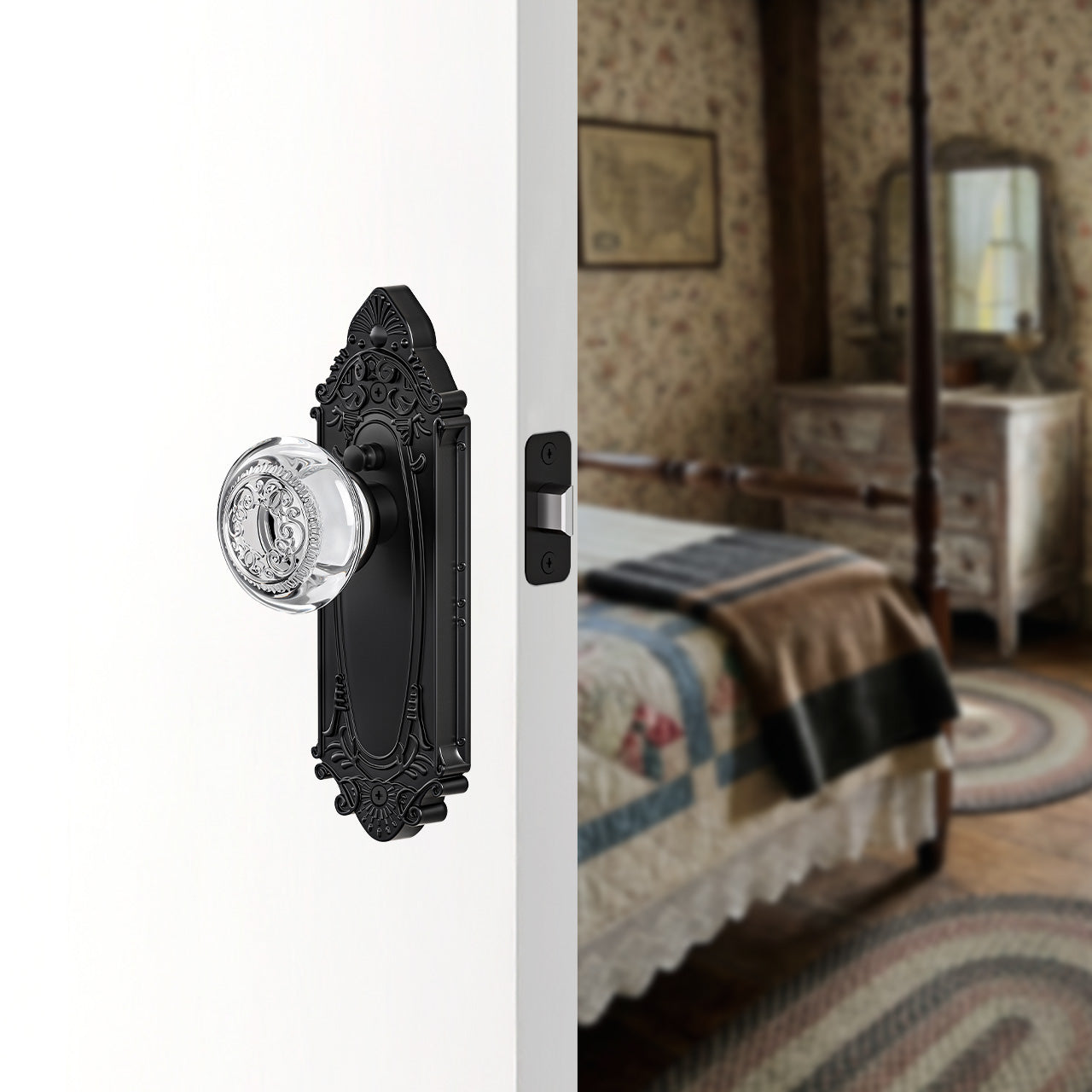
Door Knobs
Door knobs often complement:
- Traditional homes
- Colonial architecture
- Vintage interiors
- Historic renovations
Door Levers
Door levers often suit:
- Modern homes
- Contemporary architecture
- Transitional designs
- Minimalist interiors
The best choice depends on your home's overall style.

Which Is Better for Older Homeowners?
For many homeowners, door levers are easier to use.
Benefits include:
✔ Less wrist movement
✔ Easier operation with arthritis
✔ More comfortable daily use
This is one reason levers are frequently recommended for aging-in-place home designs.
Which Is Better for Families?
Both options can work well.
Choose a door knob if:
✔ You prefer a classic appearance
✔ You want traditional hardware
Choose a door lever if:
✔ Convenience is important
✔ Children regularly use the door
✔ Accessibility is a priority
Front Door Lever vs Front Door Knob: Quick Comparison
| Feature | Door Lever | Door Knob |
|---|---|---|
| Ease of Use | ★★★★★ | ★★★ |
| Accessibility | ★★★★★ | ★★★ |
| Traditional Appearance | ★★★ | ★★★★★ |
| Modern Appearance | ★★★★★ | ★★★ |
| Security | ★★★★ | ★★★★ |
| Family Friendly | ★★★★★ | ★★★★ |

Should You Pair Either Option With a Deadbolt?
Yes.
Most front doors benefit from a deadbolt regardless of whether you choose a lever or a knob.
A common configuration includes:
✔ Keyed entry lever + deadbolt or ✔ Keyed entry knob + deadbolt
This combination provides both convenience and enhanced security.

Frequently Asked Questions
Are door levers more secure than door knobs?
Not necessarily. Security depends primarily on the lock and deadbolt rather than the handle style.
Are door levers easier to use?
Yes. Door levers generally require less grip strength and are easier to operate.
Which is more popular for modern homes?
Door levers are increasingly popular in modern and contemporary homes.
Can a front door knob be paired with a deadbolt?
Absolutely. This is one of the most common front door hardware setups in North America.
Final Thoughts
Both door levers and door knobs can work well on front doors.
If you prefer traditional styling, a keyed entry door knob may be the ideal choice.
If convenience and accessibility are priorities, a door lever often provides a better user experience.
Regardless of which style you choose, pairing it with a quality deadbolt remains one of the best ways to improve front door security and functionality.